



Hello you
we announced the opening ceremony sites selling Hosting, Domain our
HiTech LLC is a provider of shared, domain and dedicated web hosting. Private and based in california ,the company was founded in 2009 by current President and CEO L. Robert Baker,who started the company from his dorm room at University. Since then, HiTechvnn has grown from a small hosting company with just three servers into a world leading and industry recognized hosting provider with more than 1,000 servers under management. The over two million domains hosted by HiTechvnn make up approximately 1% of the world's Internet traffic......
Click Here
Thank you
by : admin
New & Update

About Me
HiTechvnn Web Hosting
Athlon II Or Phenom II: Does Your CPU Need L3 Cache?
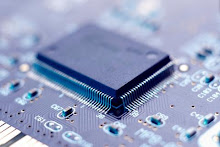
It makes sense to equip multi-core processors with a dedicated memory utilized jointly by all available cores. In this role, fast third-level cache (L3) can accelerate access to frequently needed data. Cores should not revert to accessing the slower main memory (RAM) whenever possible.
That’s the theory, at least. AMD’s recent launch of the Athlon II X4, which is fundamentally a Phenom II X4 without the L3, implies that the tertiary cache may not always be necessary. We decided to do an apples to apples comparison using both options and find out.
How Cache Works
Before diving deeper into our tests, it’s important to understand some basics. The principle of caches is rather simple. They buffer data as close as possible to the processing core(s) in order to avoid the CPU having to access the data from more distant, slower memory sources. Today’s desktop platform cache hierarchies consist of three cache levels before reaching system memory access. The second and especially the third levels aren’t just for data buffering. Their purpose is also to prevent choking the CPU bus with unnecessary data exchange traffic between cores.
Cache Hit/Miss
The effectiveness of a cache architecture is measured by its hit rate. Data requests that can be answered within a given cache are referred to as hits. If that cache doesn’t contain the sought data and must pass the request on to subsequent memory structures, this is a miss. Obviously, misses are slow. They lead to stalls in the execution pipeline and introduce wait periods. Hits, on the other hand, help sustain maximum performance.
Cache Writes, Exclusivity, Coherency
Replacement policies dictate how room is created in a full cache for new cache entries. Since data written into a cache eventually has to be available in the main memory, systems can either do this at the same time (write-through) or mark overwritten locations as “dirty” (write-back) and execute the write once the data is wiped out of the cache.
Data on several levels of cache can be stored exclusively, meaning that no redundancy exists. You won’t find the same piece of data in two different cache structures. Alternatively, caches can operate in an inclusive manner, with lower levels guaranteed to hold the data found in higher-levels (closer to the processor) of cache. AMD’s Phenom works with an exclusive L3 cache, while Intel follows the inclusive cache strategy. Coherency protocols take care of maintaining data across multiple levels, cores, and even processors.
Cache Capacity
Larger caches can buffer more data, but they also tend to introduce higher latency. Since cache also consumes large amounts of a processor’s transistors, it is important to find a viable balance between transistor cost and die size, power consumption, and performance/latency issues.
Associativity
RAM entries can either be direct-mapped, meaning that there can only be one position in a cache for copies of main memory, or they may be n-way associative, which stands for n possible positions in the cache to store data. Higher associativity (up to fully associative caches) provide the best caching flexibility because existing cache data doesn’t have to be overwritten. In other words, high n-way associativity guarantees higher hit rates, but it introduces more latency, since it takes more time to compare all of those associations for hits. Ultimately, it makes sense to implement many-way associativity for the last cache level because there’s the most capacity available, and searching beyond that would send the processor out to slower system memory.
Here are some examples: The Core i5 and i7 work with 32KB of 8-way associative L1 data cache and 32KB of 4-way associative L1 instruction cache. Clearly, Intel wants instructions to be available quicker while also maximizing hits on the L1 data cache. Its L2 cache is also 8-way set-associative, while Intel’s L3 cache is even smarter, implementing 16-way associativity to maximize cache hits.
However, AMD follows another strategy on the Phenom II X4 with a 2-way set-associative L1 cache, which offers lower latencies. To compensate for possible misses, it features twice the memory capacity: 64KB data and 64KB instruction cache. The L2 cache is 8-way set-associative, like Intel's design, but AMD’s L3 cache works at 48-way set associativity. None of this can be judged without looking at the entire CPU architecture. Naturally, only the benchmarks results really count, but the whole purpose of this technical excursion is to provide a look into the complexity behind multi-level caching.
by : Patrick Schmid and Achim Roos
Microsoft introduces 'Starter' version of Office

Aiming to turn more new PC buyers into Office users, Microsoft has announced plans for several new ways to obtain the software, including an ad-supported "Starter" edition that can come loaded on new PCs.
In a blog posting Thursday, Microsoft said the starter version of Office will have limited features and include only Excel and Word. The starter version will be part of the Office 2010 family, due out next year, and will only be available on new PCs.
The product is a replacement for Microsoft Works, which was Microsoft's low-cost option for PC makers that wanted to include basic productivity software. Microsoft had also quietly tinkered with a free, ad-supported version of Works in recent years.
Office Starter, as opposed to Works, will have full file compatibility with Office as well as features like the 'Ribbon' user interface.
"It really is a replacement for Works," Microsoft corporate vice president Takeshi Numoto said in an interview on Thursday. "It is not a mere renaming of Works. It is an Office product."
Microsoft is trying several ideas to better compete with free rivals such as Google Docs. With Office 2010, Microsoft will also offer a free, ad-supported version of Office that runs in a Web browser. That product, which went into a technology preview last month, requires connection to the Internet at all times.
"It's a way for us to reach customers who may have not experienced Office before, (for them) to get a taste of it," Numoto said.
For years now, Microsoft has grappled with new ways of selling Office, which, along with Windows, is one of the company's two main profit engines. Although Office boasts half a million users, there are lots of folks that use pirated copies of the software or don't have Office at all.
Several years back, as part of a ThinkWeek paper seen by CNET News, Microsoft workers recommend that the company scrap Works in favor of an ad-supported product, saying Microsoft only got a couple dollars of revenue per PC when Works was included.
Numoto would not go into financial details for Office Starter, but did say that it is a "royalty-bearing" product for Microsoft, as Works was. In the past, though, PC makers have had an opportunity to earn back money if customers upgrade from a trial version of Office to the full version. Numoto wouldn't detail how that might work with Office Starter.
Microsoft is also trying out a new method for those that already have a PC to try out Office 2010, once it is available. Called "Click to Run," it brings the notion of streaming to software. Instead of waiting for the whole product to download, users can click a button and start using the software as soon as some of the basics are downloaded. The rest of the product then gets downloaded over time.
Microsoft has already seen the Web increase as a means for getting its software. Numoto said that in the last fiscal year some 23 million downloads of the Office trial, nearly double the number from a year earlier.
Still, he said, downloading a big file means a long wait. "We know we could do a lot better to streamline that experience," he said.
An additional benefit of the Click to Run installation is that it is done through application virtualization. That allows the code, even though it is still being run locally, to run side-by-side with an existing version of Office. That would allow, for example, a user to run a trial version of Office 2010, without getting rid of their existing Office installation.
Apple releases iPhone OS 3.1.2
Apple on Thursday released an update for the iPhone operating system, bringing the current version of the OS to 3.1.2.
According to notes accompanying the update, Apple fixed three bugs, which may not seem like a lot, but they are important. Among the changes is a fix for what Apple says is a "sporadic issue," where the iPhone would not wake up from sleep mode.
The update also resolves an issue that could interrupt the cell network until the phone is restarted. A bug that caused a crash during video streaming has been addressed in iPhone OS 3.1.2.
Apple said iPhone OS 3.1.2 is compatible with the iPhone, iPhone 3G, and iPhone 3GS. The update is available by plugging your iPhone into your computer and clicking on the update button in iTunes.
Once finished, your iPhone will restart and immediately alert you to a Carrier Settings update. This is a very small update that will be completed without needing to restart again.
The Google Android party has begun
 By : Marguerite Reardon
(CNET) -- After two years of waiting, Google Android phones are finally hitting the market en masse.
In the past couple of months, nine devices using Google's mobile operating system have been announced, including the Motorola Cliq, which goes on sale in November, and the new Samsung Moment, which was announced Wednesday at the CTIA Fall 2009 trade show in San Diego, California.
The pipeline is full of more Android devices, some of which have been confirmed and some that are still rumored to be in development.
"We are seeing a lot of interest in Android here," Kim Titus, a spokesman for Samsung, said Wednesday at the CTIA trade show, where the company is showing off its two Google Android handsets: the Samsung Moment and the Samsung Behold II.
"I think these devices have an opportunity to become strong cross-over devices appealing both to business customers as well as to consumers and prosumers."
U.S. wireless operators are also jumping on the Google Android bandwagon. So far, T-Mobile USA, the smallest of the four nationwide carriers, has been the only U.S. wireless operator to offer Android devices. Once the Motorola Cliq and the Samsung Bold II launch, T-Mobile will be offering four different Google Android devices on its network.
But T-Mobile won't be the only Android carrier in the U.S. for much longer. Starting next week, Sprint Nextel will introduce its first Android phone, the HTC Hero. And a couple of weeks later on November 1, it will begin selling the newly announced Samsung Moment.
Verizon Wireless, the nation's largest wireless operator, will also be getting two new Google Android phones in the coming weeks. Verizon executives wouldn't provide specifics about the devices, but one of the devices is expected to be from Motorola.
Verizon and Google said Tuesday that they will be working closely to introduce new Google Android phones.
Even AT&T, the second largest wireless provider in the U.S. and the exclusive U.S. carrier for the iPhone, is expected to have a Google Android phone soon. On Wednesday, the Wall Street Journal published a report stating that AT&T will be offer Dell's soon to be announced Google Android phone.
Device makers see Android as their biggest hope to compete against Apple's iPhone and Research in Motion's BlackBerry devices in the smartphone market. Both Apple and RIM develop their own software that is proprietary to their homegrown hardware.
Like the Google Android operating system, Microsoft's Windows Mobile platform can also be used on different hardware. But as Microsoft struggles to keep pace with the rapidly changing mobile market, some device makers, such as Motorola, are gravitating toward Android.
This is not to say that Microsoft is out of the game. In fact, the company just announced Windows Mobile 6.5 this week at CTIA, but experts, such as CNET's own Bonnie Cha, believe the upgrade is incremental with a bigger overhaul of the software not expected until next year.
Meanwhile, momentum is growing for Google Android phones.
Google unveiled its Android open development operating system in the fall of 2007. It took a year before the first Android phone, the HTC G1 sold by T-Mobile, was introduced.
Many industry watchers had expected other handset makers to start announcing their own Android devices in February 2009 at the GSMA World Congress trade show in Barcelona. But the show came and went with few mentions of Android.
Later that spring, people were expecting Android announcements at the CTIA's spring trade show in Las Vegas. But device makers kept mum. In June, T-Mobile USA and HTC introduced the second Android handset into the U.S. market, the MyTouch.
This phone was supposed to be a more refined version of the G1 and was designed to appeal to the mainstream wireless consumer.
Now as Android is about to hit its second birthday, the much anticipated flood of Android device announcements is beginning. Manufacturers, such as Samsung, Motorola, LG and HTC are announcing multiple Google Android devices. Motorola's co-CEO Sanjay Jha said this week that he expects his company to introduce "multiple tens of products" using the Android operating system.
Even phone makers Sony Ericsson and Nokia, which historically have built phones using the Symbian operating system, are rumored to be working on Android handsets. The operating system has even appealed to companies not traditionally in the cell phone business, such as laptop makers Lenovo and Dell and Chinese telecom equipment maker Huawei.
While Google Android may give device makers, such as Samsung and Motorola, a way to compete with the iPhone, it could be difficult for them to differentiate their products.
So far, the Android devices that have been announced look very similar. All of them sport a touch screen that takes much of the face of the phone. Some, like the Motorola Cliq and the Samsung Moment, also have QWERTY keypads that slides out for consumers who like the feel of real keys.
Samsung's Titus said there are subtle differences in the hardware. For example, the Samsung Moment uses a bright OLED screen that makes images sharper and colors more vibrant.
The screen is also designed to be more energy efficient. And the Moment uses much faster processors that most other cell phones. But he conceded that because all the devices use a touch screen that they look very much alike.
"When you have a screen that takes up so much of the landscape, it's not surprising that they look somewhat similar," he said.
Since the Android platform is completely open, the real customization will likely be software based. For example, the Samsung Moment, which will be sold on Sprint's network, comes preloaded with applications and features specific to Sprint's network.
These applications include Sprint's navigation service and applications for NFL and Nascar, two organizations which have special relationships with Sprint.
Motorola has also customized the user interface for its Cliq phone and it has introduced Motoblur, a social-networking-optimized version of the user interface. Motorola executives told developers at its conference this week that it expects some but not all of its new Android phones to come with Motoblur installed.
While handset makers and wireless operators may be tempted to further customize the Android software, doing so is risky since the promise of an operating system such as Android is to provide developers with an easy and open way to develop applications that can be downloaded across multiple devices.
So far developers have already created more than 10,000 applications for Google Android devices. These apps can be accessed through the Google Android Market. Big developers, such as Facebook, have already begun developing Android specific applications. And at its developer conference, Motorola announced a series of new apps available for the new Cliq, including Accuweather, the Barnes & Noble eReader, MySpace, and QuickOffice, the company said.
But as new devices are introduced on different carrier networks, it will be interesting to see if these applications in the Android Market will work across all the different hardware.
If they do, they could drive more Android device development, which could lead to the Android mobile platform actually living up to the hype that was promised nearly two years ago. And if they don't, then Android will likely become just another mobile operating system that further fragments the market.
Subscribe to:
Posts (Atom)

